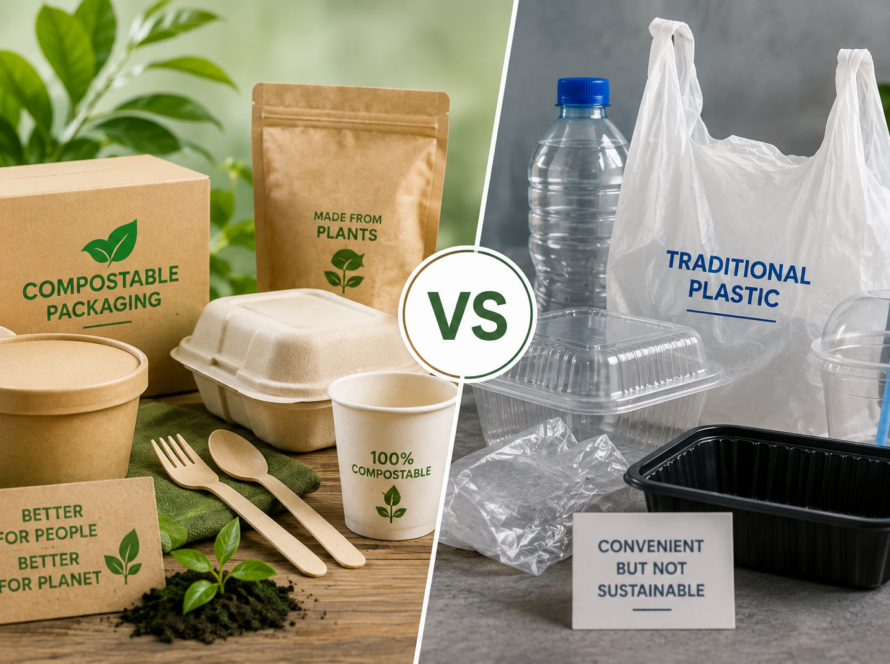
Few materials have shaped modern life as thoroughly as plastic. It keeps food fresh, protects goods in transit and costs very little. Yet the same qualities that make it so useful also make it stubborn, because it can remain in the environment long after a product has served its purpose. Businesses and households are now asking a practical question: what can we use instead, without losing convenience?
The honest answer is that there is no single replacement. There are several smarter alternatives, each with strengths and limits. This article walks through the main options so you can match the right material to the right job.
Why Look Beyond Traditional Plastic
Conventional plastic is made mostly from fossil resources and is built to last. That durability becomes a drawback for items used for minutes, such as shopping bags, produce covers and courier mailers. Collection systems struggle to capture all of this lightweight material, so a share of it escapes into drains, farmland and waterways.
Pressure to change comes from several directions at once: government rules on single-use plastic, buyer preferences, and brand commitments to cut waste. Choosing alternatives is no longer just a values decision. It is increasingly a business necessity.
Paper and Fibre-Based Packaging
Paper, card and moulded fibre are familiar and easy to understand. They suit boxes, wrapping, cartons and dry goods, and most people know how to recycle them. Their limits appear when moisture or heavy loads are involved. Paper bags can weaken when wet, and coatings used to improve water resistance can make recycling harder. They also require substantial water and energy to produce, so they are not automatically the greenest choice.
Reusable Containers and Systems
Glass jars, metal tins and sturdy reusable bags tackle waste by removing single-use items entirely. Refill stations and return schemes work well for local, repeat-purchase businesses such as cafes and neighbourhood stores. The challenge is logistics. Reuse needs cleaning, collection and customers who return containers consistently, which is harder for long-distance shipping or one-time purchases.
Recycled Plastic
Using recycled content reduces the need for new raw material and keeps existing plastic in circulation. It is a useful step where plastic remains essential, for example in some industrial applications. However, recycling rates depend heavily on local collection and sorting, and recycled plastic still behaves like plastic once it is discarded.
Plant-Based and Compostable Films
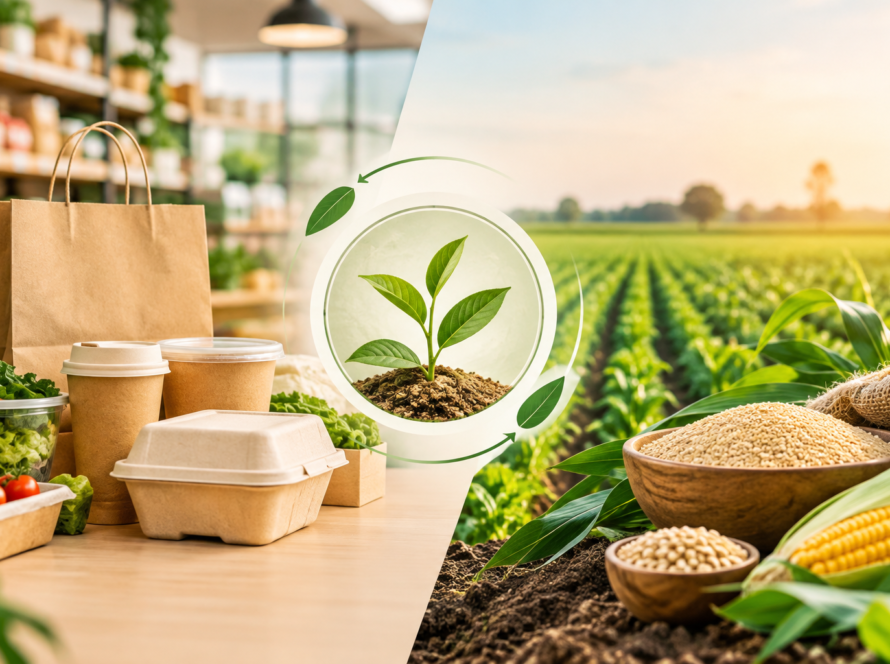
This is the category that has grown fastest for everyday flexible packaging. Plant-based biopolymers derived from sources such as starch, cellulose and lactic acid can be shaped into bags, films and pouches that look and feel like ordinary plastic. When certified, they break down in composting conditions instead of lingering for decades.
There is an important caveat. Bioplastics are a broad family. Some are bio-based but not compostable, and some are compostable but not entirely plant-derived. That is why certification to ISO 17088 and clear manufacturer marking are essential. If you want to understand the differences between these materials in more detail, this explainer on bioplastics, their types and benefits is a helpful starting point.
Comparing Your Options
- Paper and fibre: Best for dry, rigid or boxed goods; limited by moisture and weight.
- Reusable systems: Best for local, repeat customers; limited by return logistics.
- Recycled plastic: Best where plastic is unavoidable; limited by collection quality.
- Compostable films: Best for bags, wraps and pouches in retail, grocery, e-commerce and waste handling; limited by the need for proper disposal routes.
How to Choose the Right Alternative
Begin by looking at what the packaging actually does. Does it need to hold liquid, resist tearing, or survive long storage? Then consider where it will end up. If customers can compost or place it in organic waste, a certified compostable film makes sense. If it will be collected and reused, a durable container may serve better.
Where Businesses Can Start
Many companies begin with the items that are used most and discarded fastest. Carry bags, courier bags, produce bags and liner bags are common first choices, as they are simple to swap and highly visible. Proviva Organics Pvt Ltd supplies these formats made from plant-based biopolymers, along with certificates that buyers can check, which makes the early stage of switching far less uncertain.
Conclusion
Moving beyond traditional plastic is not about finding one perfect material. It is about choosing intelligently for each use, combining reuse, recycling and compostable options where each performs best. Everyday packaging is a particularly good place to start, because small items add up to large volumes of waste. With clear standards, careful testing and a knowledgeable supplier such as Proviva Organics Pvt Ltd, businesses can adopt smarter alternatives with confidence and help build a cleaner, more practical future.